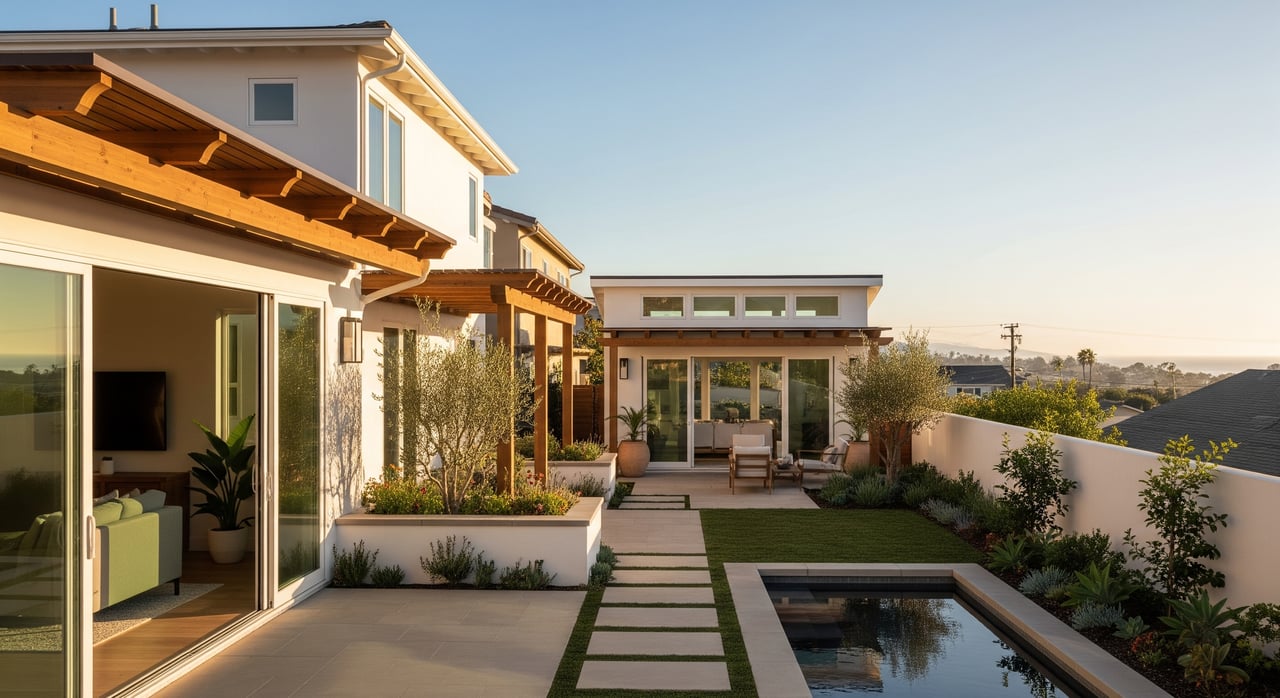
Thinking about buying in Carlsbad with an eye on adding an accessory dwelling unit? You’re not alone. ADUs can unlock flexible living space, create rental income, and boost long-term value in a high-demand coastal market. In this guide, you’ll learn how to spot ADU-friendly properties, what local rules and coastal factors to expect, and how to plan budgets and timelines with confidence. Let’s dive in.
Why ADUs matter in Carlsbad
ADUs give you options. You can house family, offset your mortgage with rent, or increase future resale appeal. In coastal cities like Carlsbad, demand for smaller independent units is typically strong thanks to proximity to beaches and jobs. That said, site traits, HOAs, and coastal rules can affect feasibility and timing, so early due diligence is key.
Carlsbad rules and permits
State rules and local limits
California ADU laws make it easier to build ADUs on many residential lots and require ministerial review when you meet objective standards. Carlsbad implements these rules through its municipal code and Local Coastal Program. The city can still apply standards like height, setbacks, lot coverage, and design within state limits, so verify what applies to your specific parcel.
Ministerial permits vs coastal or discretionary
Many compliant ADUs qualify for a ministerial ADU permit, which is typically faster and non-discretionary. If your property is in the Coastal Zone or on a coastal bluff, you may need a Coastal Development Permit. Discretionary approvals or variances may be required if you seek relief from standards like setbacks or coverage. Expect standard building, utility, and fire approvals in all cases.
Parking and transit
State law reduces new parking requirements for many ADUs, especially near transit. Carlsbad may have specific standards and exemptions, so confirm whether your location qualifies for parking relief. Proximity to transit and walkable amenities can also support rental demand.
Timelines and fees
When plans are complete and your design meets objective standards, ministerial approvals are often measured in weeks to a few months. Coastal or discretionary reviews can add months. Fees include plan check, building, and permit costs, with additional fees possible for coastal review or hearings. Always check the latest city fee schedules.
Spot ADU-friendly traits
Zoning and lot basics
- Confirm the residential zoning designation.
- Look for usable rear-yard space and a generally flat area for a detached unit.
- Garage conversions are often the fastest, most cost-effective option compared with new detached construction.
Setbacks and access
- Rear-yard room helps with detached placement and privacy.
- A side path of roughly 3 to 5 feet is useful for access and construction.
- Alley access can simplify separate entry and reduce driveway impacts.
Utilities and infrastructure
- Short runs to existing water and sewer lines keep costs down.
- Older electrical service may need an upgrade to 200A when adding an ADU.
- Steep grades or drainage issues can drive up foundation and site work costs.
Topography and trees
- Favor flat to gently sloped lots.
- Coastal bluffs often require geotechnical reports and can restrict build area.
- Mature or protected trees may add design and permitting steps.
Parking and driveway layout
- Existing driveways and off-street parking help if replacement parking is required for a garage conversion.
- Verify if parking exemptions apply at your location.
HOAs and CC&Rs
- Many planned communities have CC&Rs that set design standards or limit ADUs. Request and review HOA documents early and seek written confirmation of what is allowed.
Plan your permitting path
- Start with a pre-application or planning intake meeting to flag coastal status, setbacks, parking, and potential studies.
- Prepare a complete submittal: site plan, floor plans, elevations, and any required technical studies.
- Expect building permits for mechanical, electrical, plumbing, and inspections through final occupancy.
- If a Coastal Development Permit or variance is required, plan for public noticing and longer timelines.
Income and use cases
Multigenerational living
Housing parents, adult children, or a caregiver can reduce household costs and increase convenience. You also avoid landlord obligations and potential vacancy risk. Confirm utility metering and occupancy rules before you finalize plans.
Long-term rental
Leasing a studio or 1-bedroom ADU month-to-month or on a 12-month term can provide steady income. You will follow landlord-tenant rules and should plan for routine maintenance, insurance updates, and reserves.
Short-term rental
Short-term rentals can produce higher gross income in some cases but are more regulated. You may need registration, transient occupancy tax compliance, and must follow any local or HOA restrictions. Always verify whether STRs are allowed for your property and ADU type.
Estimate revenue and cash flow
Use a simple framework to avoid overestimating returns:
- Identify nearby market rents for studios and 1-bedrooms. Use conservative numbers.
- Calculate annual gross income and subtract a vacancy and management allowance. A 20 to 30 percent deduction is a common conservative starting point for long-term rentals.
- Add estimated increments for taxes, insurance, utilities, maintenance, and reserves.
- Incorporate financing terms from a lender familiar with ADU loans.
Construction costs and ROI
Costs vary by scope, finishes, and site complexity:
- Garage or interior conversions: often the lowest cost and most timeline-efficient, ranging from tens of thousands to the low hundreds of thousands depending on scope.
- Detached ADUs: often several hundred thousand dollars in coastal locations, depending on size and finishes.
- Hillside or bluff properties: expect higher costs due to foundation work, retaining walls, and geotechnical requirements.
Obtain multiple bids and include a 10 to 20 percent contingency, or more if the site is complex or coastal.
Pre-purchase checklist
Zoning and Coastal Status
- Confirm zoning and whether the parcel is in the Coastal Zone.
- Ask a city planner if ADUs are allowed by right for the parcel and what approvals apply.
Site and Utilities
- Review a site plan for rear yard size, side access widths, alley access, and slope.
- Confirm sewer connection versus septic and distance to the sewer lateral.
- Note electrical service capacity and nearby transformers.
Existing Structures
- Evaluate garage size and condition for a potential conversion.
- Identify any accessory buildings and verify if they can be repurposed.
CC&Rs and HOA
- Obtain CC&Rs and written HOA guidance on ADUs.
Permitting Pre-checks
- Schedule a pre-application meeting with Carlsbad Planning and Building.
- Ask about typical studies, such as geotechnical or tree protection.
Financial Modeling
- Build a conservative pro forma using local rent comps.
- Include construction bids, fees, taxes, insurance, and vacancy.
- Speak with lenders experienced in ADU financing products.
Team and Timeline
- Line up an ADU-savvy architect, engineer, and builder with coastal experience.
- Set realistic permitting and build timelines: weeks to a few months for ministerial approvals once complete, longer for coastal or discretionary reviews. Conversions can take a few months to build; detached units often take 6 to 12 months or more.
Your next steps
If you love the idea of an ADU, focus your search on parcels that lower risk and cost: flat lots, usable rear yards, good side access, nearby utilities, and clear HOA allowances. Pair that with a permitting plan that accounts for Coastal Zone status, geotechnical needs, and replacement parking. With the right guidance, you can buy with confidence and build on your timeline.
Ready to target the right Carlsbad properties and pressure test ADU feasibility before you write offers? Connect with the Middleton Team for curated buyer representation and a due-diligence plan tailored to your goals.
FAQs
Are ADUs allowed on all Carlsbad residential lots?
- State law broadly enables ADUs in many residential zones, but lot traits, coastal status, HOAs, and local standards can affect eligibility. Verify your parcel with city planning.
What if the Carlsbad home is in the Coastal Zone?
- You may need a Coastal Development Permit, and coastal bluffs often require geotechnical reports and setbacks. These steps can add time and cost.
How long do ADU permits and construction take in Carlsbad?
- Ministerial approvals often take weeks to a few months after complete plans. Coastal or discretionary reviews add months. Conversions can build in a few months; detached units often take 6 to 12 months or more.
Do I need to add parking for an ADU?
- State rules limit new parking requirements in many cases, especially near transit. Carlsbad may have exemptions. Check whether your specific parcel qualifies.
What ADU type is the most cost-effective?
- Garage or interior conversions typically cost less and finish faster than new detached builds, especially on flat lots with nearby utilities.
Can I use an ADU as a short-term rental in Carlsbad?
- Short-term rentals have specific rules, registration, and possible restrictions. Always verify local municipal and HOA requirements before planning an STR.